
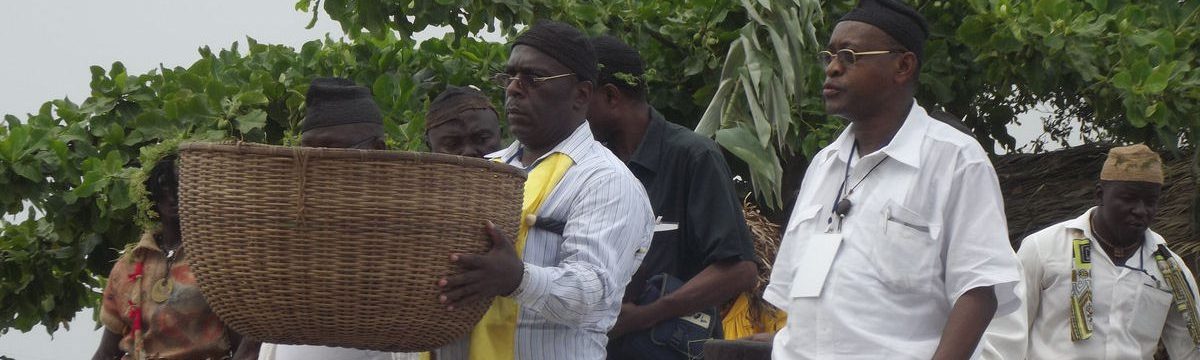
Mbongo was the great patriarch of the SAWA people, and he was a national of the Grand Congo, which constituted: The democratic Republic of Congo, Gabon, Congo-Brazzaville, Central Africa Republic, Cameroon, and Equatorial Guinea.
SAWA patriarch Mbongo arrived on the banks of the River Oli (Wouri) in 1578 accompanied by his entire clan. Although some stopped along the way, some in Gabon, others in Congo, etc. They are all Bantus, hence the origin of the word Bato, meaning men.
These Bantus were nomads who migrated from North Africa, specifically the land of the Pharaohs which enjoyed sovereignty since ancient times and encompassed Nubia, present-day Egypt, Sudan, Libya, etc. The name “Egypt” didn’t exist in the time of the Pharaohs, much like the term “slave” did not exist in ancient jargon, as the West wanted us to believe. The Bantus were one people without distinction before defragmentation.
After the death of SAWA patriarch Mbongo, his son Mbedi aka Mbed’a Mbongo took over power.
The Journey
Upon reaching the banks of River Oli (Wouri), Mbedi and his clan found the Bakoko, also known as Bato ba Mukoko, who were the first inhabitants of the river, on the spot. By the way, Bakoko was not their name at all but rather an inherited designation or name from the Mbed’a Mbongo clan, who were believed they outnumber the grains of sand, such that the Bassa came to add to the number of this multitude.
The Bakoko occupied part of the river which was then called “Mbende”, while the Bassa called it “Bayondo.” As for the Duala, they called it the “Oli”, a term that the French now translates to “Wouri.”
The Bakoko proved to be hospitable to the Mbedi delegation, and their chief gave one of his daughters in marriage to the chief of the Mbedi clan in exchange for a hypothetical peace. From this union were born Ewale and all his brothers. Contrary to the widely spread version, Ewalé’a Mbedi was indeed born in Cameroon, to a Bakoko woman named Oho’a Songe, from the village of Yansoki, and she was the wife of the great and highly respected Mbed’a Mbongo, who, on the other hand, was born in Congo. Now, among the Bantu, nothing is more sacred than a mulalo, a maternal relative. Even in times of war, they are among those who are spared first, which is why there is the Duala proverb: Mulalo a si ma wo o bila! (“An in-law does not die in war!”, implying: we will never let them die!). Thus, in ancient times, royal hostages were never executed.
In our culture, aren’t the children of the sister always more cherished and pampered? In any case, the mother is always recognized, but the father is rarely acknowledged, and whether or not he initiated official steps in this regard, there will always remain doubt about his role. Furthermore, according to the family tree (manela’a bwele), this entire family, descending from the same common ancestor, is itself subdivided into several large families, including those from Mount Koupé and those from Tubé (“the Ocean”).
DUALA
Clans descended from the sons of Ewalè Mbedi
There are two main clans:
- Les Bona Dooh: the Bonanjo and Bonabédi (Bonaberi) clans.
- Les Bonambela: the Bonaku (Akwa) and the Bonebela (Deïdo) clans.
BOMBEDI
Clans descending from the sons of Ngae Mbongo A bèsè ba Diketi la Ngoso a Manela Bwele. In their transcription, several names are not pronounced the same way in all regions, such as Esonjè in Duala, which becomes Isuwu in Subu.
- Ngasè: Logasè
- Tanga: Batanga
- Naah: Bakweri
- Esonjè: Isuwu, Balondo
- Mbongo Kenguè: Bongkeng, Solè banya Boneko
- Ngome: Ndogbianga
BOMBEDI
Clans descending from the sons of Mbedi Mbongo a bèsè ba Diketi la Ngoso a Manela Bwele. The large family was formed by the descendants of Ewalè’s brothers, meaning the sons of Mbedi. Many of them are known by their nicknames, such as Jongo, founder of the Bojongo clan, whose real name is Ekankanga.
- Ewalè: Du’Ewalé, Duwalé, today Duala (Douala)
- Ekankanga: Bojongo
- Ma’le: Jebale, Ban’epea, Bodimun, Kodi
- Mooh: Malimba
- Mudibè: Bwele, Ewodi
- Epongè: Pongo
- Ngungè: Bankon, Abo-Nord
- Munoh: Banoh
- Mo’ongo: Mongo
- Kolè: Balolè
- Kèm: Bakèm
BOKUMBA
Clans descending from the sons of Ekumba ma Tadi la Njambe a Ngoso nèlè a Bwèlè. The families settled in the mountains on the fertile volcanic soil: the large Bokumba family, with the sub-family Barombi, Balombi, located around Mount Koupé.
- Nfo: Bafo
- Longo: Balong
- Lômbo: Barombi, Abo-South, Bakundu
BAKOTA
Descendants of two of the sons of Lèngè Ishila Kota Tukuru a Nogso a Manela Bwele: Kota Lengè and Eyangi a Lèngè. The large family of the descendants of Kota and Eyangi, known as Bakota, constitutes part of the mountainous region around Mount Koupé.
- Kunda Kota: Mukanda Mwil’a Kota, Bafun (Penja)
- Eshira Eyangi: Banyangi
BOSE MINIE
Descendants of the sons of Ngoh o Mulongo and Akube a Mulongo, Mulongo ma Sè Tukuru a Manela. The descendants of Ngoh and Akube (Asume), are mostly located on Mount Koupé, the Nlonako Mountains, and Mount Manengouba. This region marks the northern boundary of the Sawa world.
- Mukula N’songo Ngoh: Bakala Mukwele a Mba a Ngoh Mgoh, Mboh
- Ano a Nge a Akube: Ninon
- Asume a Nge a Akube: Bakos
- Ngel a Nge a Akube: Mwangel, Mwamennam, Manehas
Here is a general genealogical tree of the Sawa. I am grateful to its author, Tete Manga Akwa, for the work accomplished. It can sometimes – if not often – be confusing, but it has the advantage of aiming for comprehensiveness. This, therefore, is a complete compilation, from which a careful verification process should be undertaken before simplifying it for better clarity. For my part, I have tried to make it more readable so that the reader does not get lost among the divisions and subdivisions. There is still a great deal of work to be done on this, but here it is, before you. It is up to you to read it and judge for yourself.
This is a clear rendition of the Sawa genealogy by TETE MONNY Georges.